Who is Arawarra?
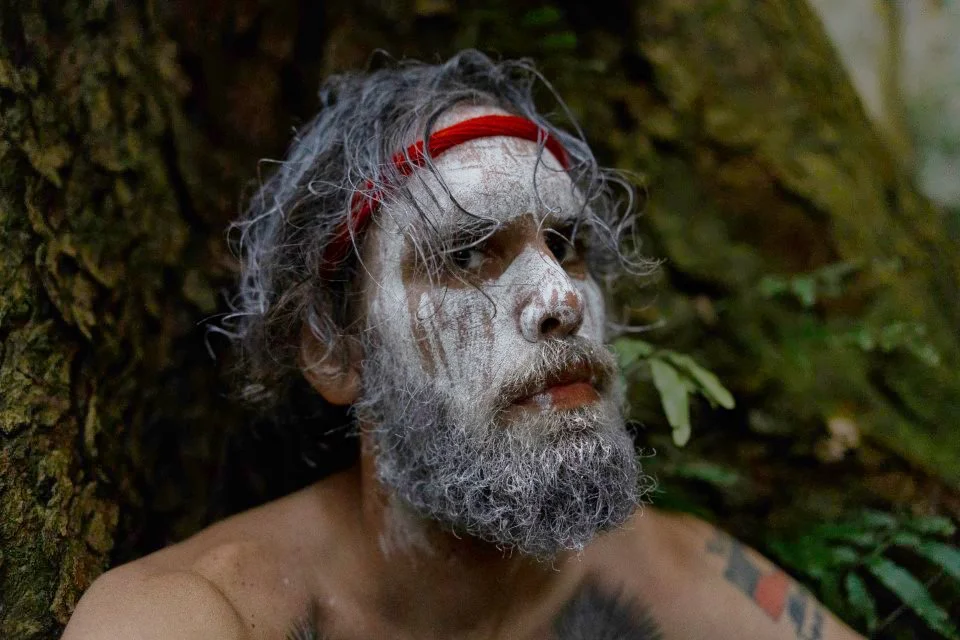
Jake Māra as Arawarra. Photo by Anthony Rigby-Smith.
Over 200 years ago, this beautiful place we live - the South Coast of NSW - was forever changed by a man named Alexander Berry. But one name you may have not heard of is Arawarra.
“Told with courage, tenderness and humanity, Arawarra unearths the hidden story of this country, and celebrates one of the many heroes on the wrong side of history.”
“Created in collaboration between Dharawal language teacher, Jake Māra, and director Lincoln Smith, Arawarra is a story of local and national significance that we need to reckon with as a nation to understand the truth of where we have come from and forge a path forward together.”
Who exactly was Arawarra? In Jake’s own words over the phone: “Arawarra is a role model, is a resistance leader. But also a father, pop, grandson and grandfather.”
It is significant that this show is at the Illawarra Performing Arts Centre. “Arawarra is a Dharawal man - and this is on Dharawal Country.”
“Being on your own land, telling our own story, it's really big. If I take this up to Scotland later this year, people don't know where Nowra or Berry or Coolangatta Mountain is. The people that are actually local, they actually get to hear a story about the Country they live on.”
Jake was told the story of Arawarra his whole life by his Uncle Warren, and this had a profound impact on his formative years. “He was always my teacher of culture and mainly language as well. The more he learned, the more he could teach. The story sort of grew as I grew up as well.”
Arawarra is a teacher of positive qualities like the ability to step up and commit to something bigger than yourself. “One of the biggest ones for me was staunchness, you know, to stand up for what you believe and not letting people tell you otherwise.”
Jake wants to let people know that anyone can connect with these common figures from around the world. “That’s why I say Arawarra wasn’t just a freedom fighter and a leader. He was a dad. He was a son. You know, those things that are universal. I think people can actually connect with an Aboriginal resistance leader in a personal way instead of, oh, I can't do it because I'm not Aboriginal.”
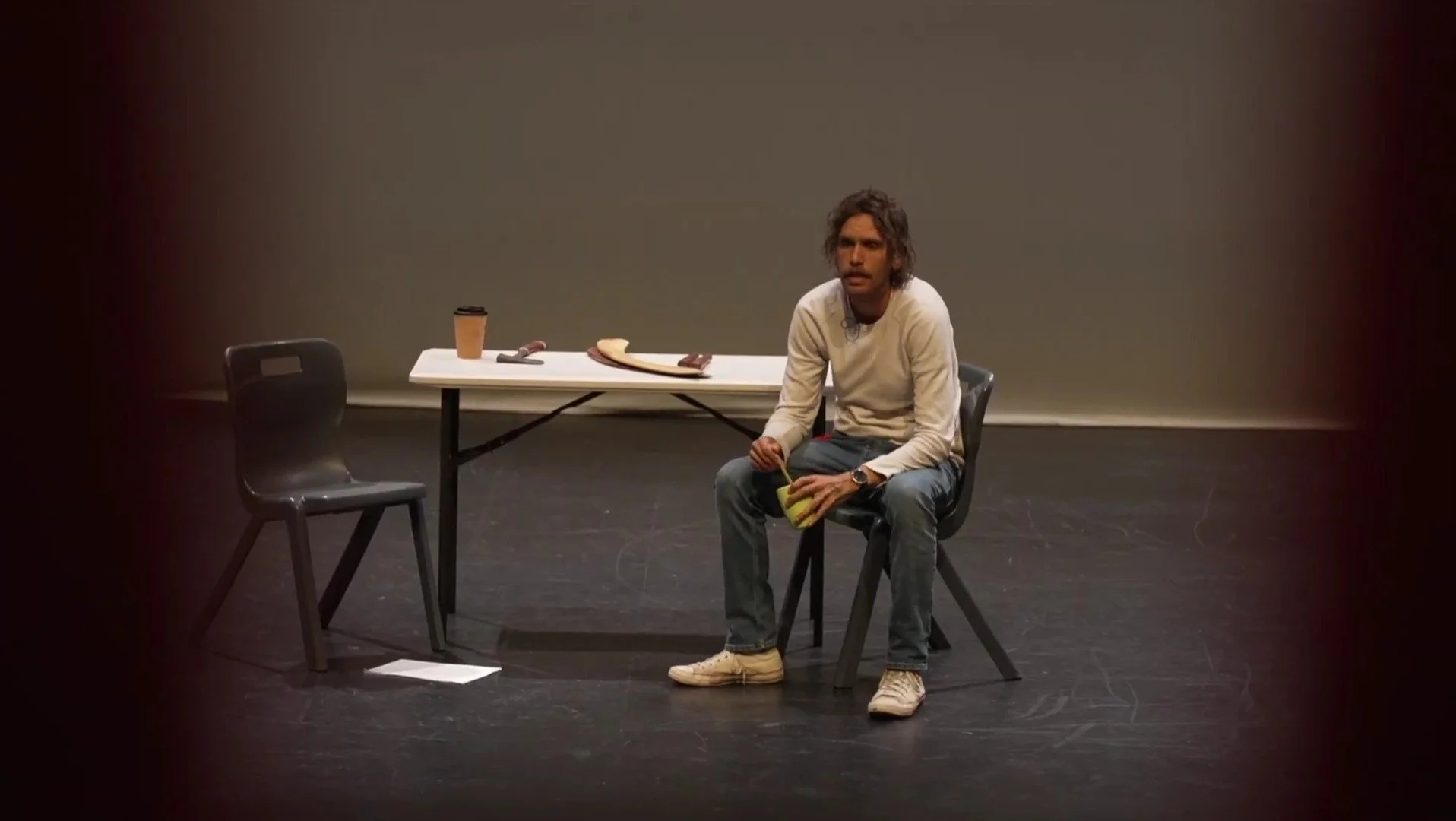
Jake said playing Arawarra on stage at first was very daunting, and he felt he had big shoes to fill. “But it was also an inspiration to have the power to almost summon his spirit a little bit to get his strength, to tell his story.”
I asked Jake what might surprise people about the show. “I think mainly it's just hearing our side of the story. You know, Alexander Berry is the 37th richest man in Australian history. He was given big awards for his charity. But people don't know about how his relationship with our people was.”
For me, it is important to reflect on the difficult emotions that truth-telling might bring up as our previously held ideas of historical figures such as Berry might change. One of the many things I was personally surprised to find out about Alexander Berry, was that he regularly corresponded with Mary Shelly, author of Frankenstein (his wife's cousin). One of my favourite pieces of macabre gothic fiction, now with the very real context of colonial grave robbing.
“The Australian researchers say they have uncovered evidence from Berry’s correspondence and his later reminiscences that he sent the skull of the Yuin leader Arrawarra to Britain in 1827, two years after he died.
They say a letter of 20 August 1827 indicates Berry dispatched the skull, probably to the Edinburgh Museum, although it has not yet been found.
It appears Berry was well aware of Arrawarra’s seniority and had met him shortly before he died.”
But Jake says it’s also about how we approach this history education. “I don't need to, you know, run down Alexander Barry and destroy his statues and things like that in Arawarra’s name. He stands on his own two feet. Taller and prouder. So, yeah, it's about just a new way of looking at Australian history, you know, and hopefully, bring a bit of closure for everyone.”
I asked Jake how the show came to be. “It all started off with a poem. So I made a poem and then I got to watch Uncle Patrick Churnside from Western Australia, his show Tjaabi.”
“That was the first theatre show I’d really been to. Growing up, theatre to me was Shakespeare and ‘to be or not to be’ - that's not for me. But once I seen Uncle, tell his story and do it his way, I said: I can do that.”
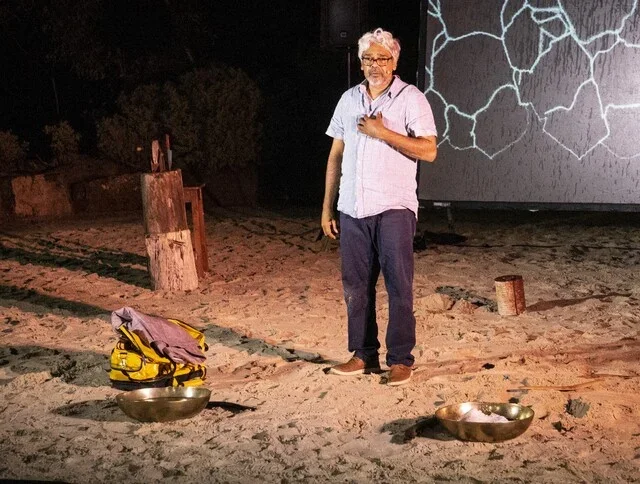
Patrick Churnside performing Tjaabi–Flood Country. Photo by Neal Rodwell.
I asked Jake what he wants the audience to take away from his show.
“Understanding. Empathy. Knowledge. And a bit of responsibility. They've been taught the story now. Just like I’ve been told the story and I'll tell as many people as I can. I'd love it if they take the story out and tell everyone else that didn’t come to the show. His name and his actions.”
“Also that we want to bring him home. Not just him, using Arawarra as a catalyst. There's thousands of people all around the world from different nationalities, different cultures that are sitting in boxes in basements.”
‘Arawarra’ will be showing 26 - 28 March 2026 at the Illawarra Performing Arts Centre (IPAC). Tickets are now sold out.
Sources and further reading:
Alexander Berry: holes in the story of a NSW pioneer conceal a dark past of Indigenous exploitation, by Lorena Allam for The Guardian
9 July, 2022
Australian Frankenstein: Alexander Berry, Mary Shelley & Arawarra, by Peter Botsman
30 March, 2025